

This might be a controversial take, but most small businesses don’t need more content. They need campaigns. Specifically, hero campaigns.
The marketing world has been tossing around a fresh term in recent weeks: hero campaigns. You might be wondering what it actually means, whether it’s different from an integrated marketing campaign (spoiler: it’s not), and whether you need one.
It sounds shiny, but it isn’t new. A hero campaign is simply an integrated marketing campaign backed by a bold idea, clear positioning, and enough creative weight behind it to cut through the sea of sameness.
You’d be forgiven for assuming that a hero campaign is synonymous with an eye-watering budget. But a hero campaign isn’t the most expensive work you’ll ever produce. It’s just the boldest.
And every major Campaign Del Mar campaign—from a $2.49 social media mini-series to a $15,000 brand film—has been a hero campaign. So we wanted to lift the hood and give you an inside look at every major campaign we’ve ever run to demystify marketing campaigns.
But first, let’s start by clearing up the jargon.
What is a hero campaign?
A hero campaign is a strategically designed, high-impact integrated marketing campaign that puts the spotlight on a specific product, a flagship program, or your brand itself. Think of it as the signature piece of marketing that defines your brand each year.
A hero campaign is not defined by budget
Some hero campaigns cost $10,000. Some cost $500. Some—like Lessons in Falling—can cost $2.49. The “hero” in a hero campaign refers to its role, not its budget. It’s the hero of your marketing plan: the idea, message, and creative direction that does the heavy lifting for your brand.
A hero campaign needs a few key ingredients: bold, clear messaging. Strong creative. Strategic integration across your channels. And a clear value proposition. Hero content isn’t always the biggest or most expensive piece; it’s simply the boldest and most strategically leveraged.
Hero Campaign vs Integrated Marketing Campaign: so, what’s the difference?
Nothing. They’re the same thing. Hero campaign is just the fresher, more modern term.
The marketing industry loves a new buzzword, and it’s been used to differentiate big idea campaigns from always-on content. A hero campaign is your conversation starter, your flag in the ground, and your brand-defining creative moment.
6 Hero Campaign Examples: Campaign Del Mar’s Anthology
Lessons in Falling (2019)
Budget: $2.49
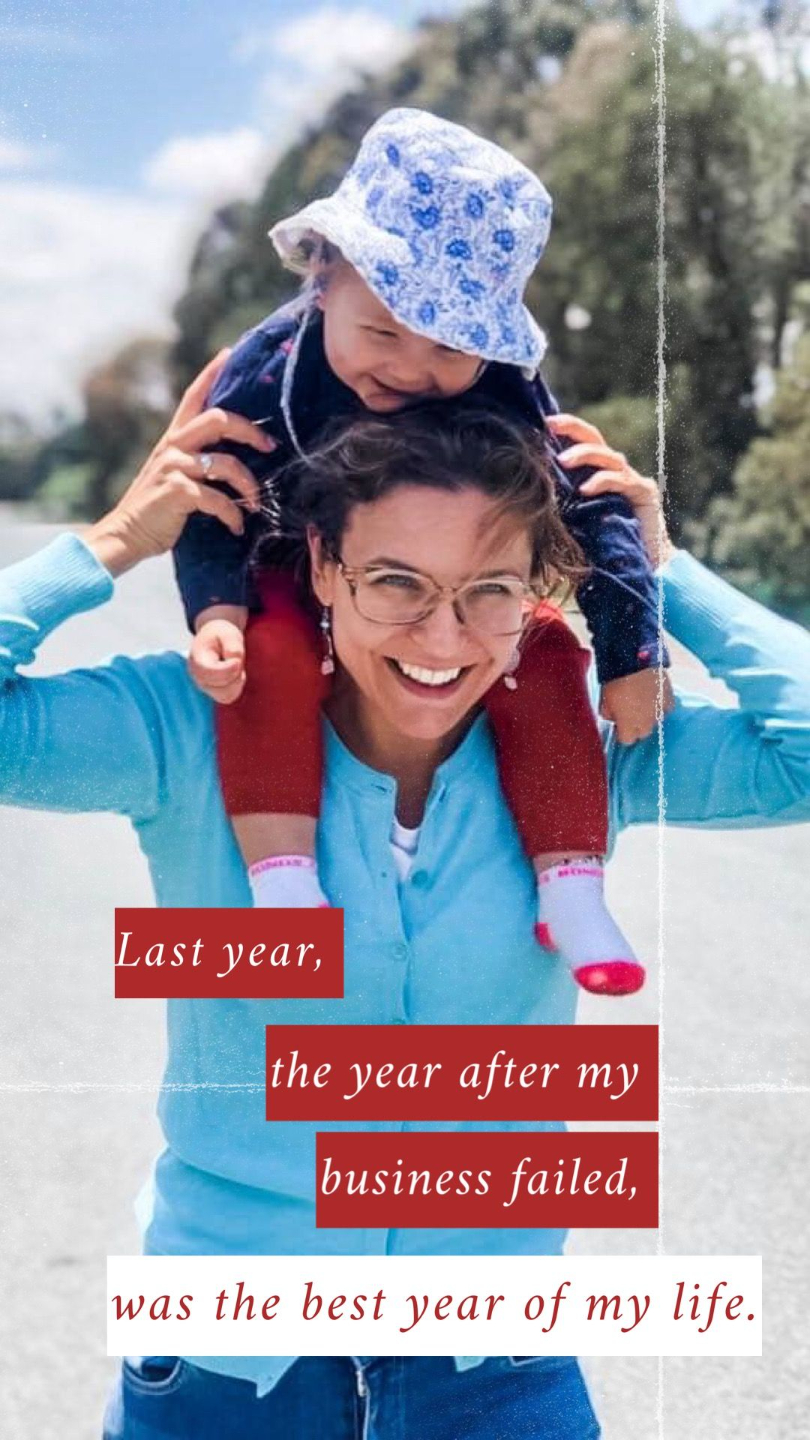
This was the first hero campaign I ever created. At the time, I was rebuilding after selling my agency and walking away from a partnership. The budget was laughably small. I bought an Unfold template pack for $2.49, sat in a Darwin café, and wrote a seven-part story about my early years in business.
The content covered everything from postnatal anxiety to shutting down my agency, a staff member stealing from me, and the strange phone call a week later offering a $200k project. I pulled old photos from scanned family albums to match the emotional tone. Nothing was chronological; the visuals were chosen for feeling, not accuracy. It was raw, honest and unpolished, which was the entire point.
It brought in our first few hundred email subscribers and followers. And people still reference this campaign years later. It also lives on as an article and a seven-part email series. Proof that a hero campaign is led by a strong story, not a big budget.
The Gurus We Deserve (2021)
Budget: $15,000
When my business partner exited and Campaign Del Mar relaunched, I knew this campaign needed to hit hard. If I was going to teach small business owners how to run campaigns, I had to walk the talk and create one myself that left a mark.
The Gurus We Deserve was a satire piece about the “seven-figure megaphone” guru grifters who promise the world in exchange for your dignity and your credit card. I wrote the script, and the team at The Tropics in Melbourne produced the scenes: fake book covers, an empty theatre, a pink money gun, the whole circus.
This campaign put Campaign Del Mar on the map. We had more eyeballs on our website than ever, Campaign Classroom filled, and my audience grew across every channel. People still find me through this video four years later, which tells you everything you need to know about the lifespan of a bold idea.
Make Marketing Great Again (2022)
Budget: $5,000
The next campaign needed to help people understand what a campaign actually is. Many business owners were hearing me talk about campaigns but couldn’t articulate what one involved.
So I borrowed a structure everyone recognises: an election campaign. And so Make Marketing Great Again was born. We shot outside Parliament House in Darwin with corflutes, stripes and a full political script (written by an actual speechwriter). I came close to melting during the shoot, wearing a blazer and trousers in 36-degree Dawin heat with 70% humidity. The campaign then evolved into a live panel event with leaders from Verve Super, Boody, Heaps Normal and Impact Business School discussing social impact campaigns.
This campaign brought in around 300 new registrations and strengthened our position in the impact-driven business community. It also introduced a fresh angle on hero campaigns: your big idea can teach something, not just promote something.
Paradiso (2022)
Budget: $1,500
After two character-driven campaigns, it was time for a stripped-back piece. Paradiso showed me on a studio floor in jeans and a t-shirt talking directly to camera about Campaign Classroom. No characters. No props. No script theatrics.
It sold out Campaign Classroom with 24 enrolments and forced me to race to my laptop mid-dinner prep to switch off checkout. It was real proof that a hero campaign can be small, simple and deeply effective if the idea is sharp.
Take Off With Us (2024)
Budget: $10,000
This was the first year I wasn’t in Australia for most of the campaign period, so I needed something strong enough to run while I was overseas. We shot a hero film on a yacht in Melbourne with drones, cast (for the first time!), and ocean light that shouldn’t look as good as it did. Take Off With Us was a video-led campaign like many of my others, but the actual video itself is not the only part of this campaign. There are emails, static posts, clips, stories. The campaign film was the hero asset, but I was able to create lots of content based on that.
This campaign launched Marketing Circle, my membership. It pulled in 27 members despite me living in Canada at the time. It proved that when a hero campaign is well-produced and anchored in a clear message, it can build trust and convert even when you’re in another hemisphere.
In Good Company (2025)
Budget: $7,000
This is my proudest hero campaign. Shot in Lennox Head with Stef Hansen, this film starred Marketing Circle members, not me. I appear only visually; the narrative is voiced by member Jen Murnaghan. Our members were the heroes, and what better way to promote Marketing Circle than with a member-led campaign?
We rewrote the script three weeks before shooting to tighten the story. The storyboard took inspiration from Wes Anderson’s catalogue. And the production ran smoothly and wrapped early because the concept was so straightforward.
It also unlocked a new professional achievement for me. Someone joined two days after launch purely because the film spoke to them. It’s exactly what a hero campaign should do: tell the truth about an offer, show what it feels like, and convert without theatrics.
One gutsy, well-planned hero campaign each year will move your brand further than a year’s worth of scattered posts ever will. We still run smaller campaigns throughout the year, but they’re supporting acts. A mini lead generation campaign or a quick and dirty sales campaign to serve specific goals, but they don’t replace your hero campaign.
If you’re tired of churning out endless content with no real payoff, you need to learn how to run campaigns. That’s the work we do inside Marketing Circle every week. We teach you how to design and execute campaigns that move people, not just fill your feed.